Can a Driver Refuse to Unload at an Icy Dock? What Businesses Should Agree On Before Winter
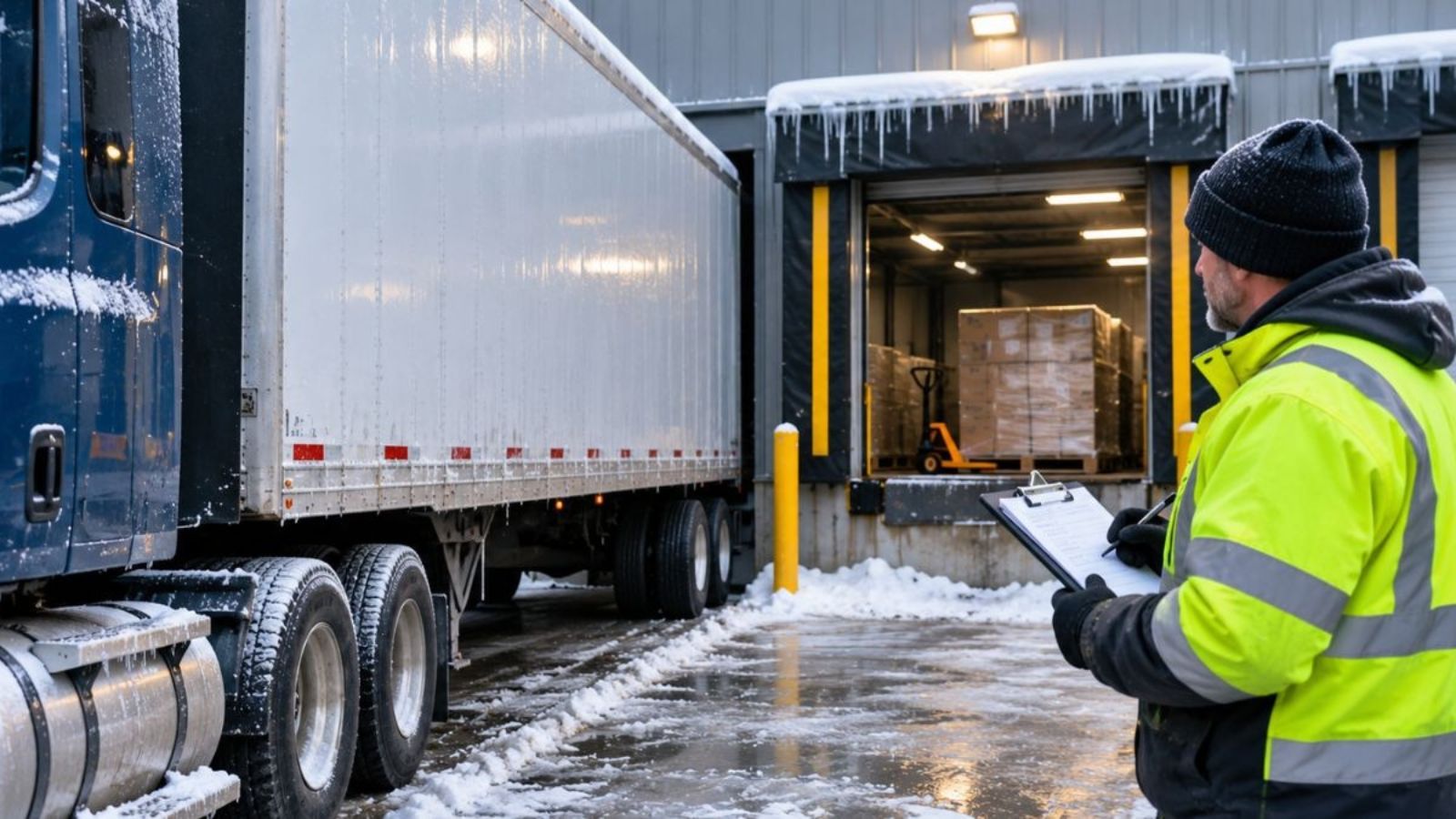
Winter weather can disrupt deliveries even when trucks arrive on schedule. Snow-covered approaches, frozen dock plates, and slippery warehouse entrances can make unloading difficult or unsafe. For businesses receiving freight, this raises an important question: Can a driver refuse to unload when the dock is covered in ice?
Unloading at an icy dock requires more than meeting a delivery appointment. Drivers must be able to access the receiving area and move freight without facing unreasonable safety risks. Shippers and carriers should agree on how to handle these situations before winter conditions affect deliveries.
Recognizing Dock Hazards
Not every icy surface presents the same level of risk. Light frost on a treated walkway may not prevent unloading, while black ice on a sloped dock approach can create a serious slipping hazard.
Drivers and receiving teams should check for:
- Black ice on concrete, asphalt, and walkways
- Frozen dock plates or dock levelers
- Snow around trailer access points
- Slippery trailer floors caused by melting snow
- Standing water that can freeze overnight
- Obstructed paths for pallet jacks and other equipment
The entire unloading area matters, not just the dock platform. Drivers may need to exit the cab, position the trailer, and move between the vehicle and warehouse entrance.
Removing visible snow does not always make a dock safe. Meltwater can refreeze, leaving a thin layer of ice that is difficult to see during early-morning deliveries.
Can Drivers Refuse to Unload?
Yes. A driver can decline an unloading operation when conditions present an unreasonable safety risk. However, specific rights and procedures depend on applicable laws, employment arrangements, carrier policies, and transportation agreements.
When unloading at an icy dock, drivers should assess the receiving area and report any conditions that create an unreasonable safety risk. A delivery appointment does not automatically make an unsafe operation acceptable. A cleared and treated receiving area may allow work to proceed, while an untreated approach that prevents safe trailer access presents a different situation.
When a driver raises a concern, the receiving team should:
- Pause the unloading operation.
- Notify the warehouse supervisor.
- Inspect the dock and access areas.
- Arrange snow removal or deicing treatment.
- Confirm that the area is safe before work resumes.
Drivers should also notify dispatch so the carrier can coordinate with the shipper and receiver. If the hazard cannot be corrected, the parties should discuss rescheduling or another suitable arrangement.
Declining an unsafe task does not necessarily mean rejecting the shipment. Unloading may proceed once the hazard is corrected.
Shipper and Carrier Responsibilities
Winter delivery problems become more difficult when neither party knows who is responsible for addressing an unsafe dock. Establishing responsibilities before the first freeze helps prevent disagreements.
Clear procedures for unloading at an icy dock help prevent disputes over safety, delays, and responsibility.
| Responsibility | What to Agree On |
|---|---|
| Dock maintenance | Who handles snow removal, deicing, and inspections |
| Safety procedures | When drivers can pause unloading and who assesses hazards |
| Communication | Contact details for dispatch and the receiving supervisor |
| Waiting time | How detention and missed appointments are handled |
| Rescheduling | Who approves revised delivery times |
Shippers should confirm that winter maintenance covers the entire truck access route, not just the dock platform.
Businesses should also clarify who provides unloading labor and equipment. Some arrangements assign unloading to the receiver, while others involve specific handling responsibilities for the driver or carrier. These distinctions matter when unsafe conditions interrupt a delivery.
Managing Delivery Delays
When a driver reports an icy dock, the receiving team should assess the problem before deciding whether the delivery can proceed.
Consider a refrigerated LTL shipment arriving early in the morning. Overnight freezing has made the dock approach slippery, but warehouse staff are already scheduled to receive the freight.
The driver reports the hazard to dispatch. The receiving manager arranges for the area to be treated and checks the access route before authorizing unloading.
If the dock remains unsafe, the parties may need to arrange another appointment or identify an alternative receiving location.
Businesses should:
- Document conditions. Record arrival times, visible hazards, and photographs when appropriate.
- Notify relevant contacts. Keep the shipper, dispatcher, and receiving supervisor informed.
- Confirm corrective action. Identify what must be cleared before unloading resumes.
- Review charges. Follow the transportation agreement when determining detention or rescheduling costs.
- Update appointments. Confirm revised delivery times with everyone involved.
Recording when the driver arrived, reported the problem, and received access helps establish the length of the delay and supports discussions about additional charges.
Refrigerated LTL Considerations
An icy dock creates additional challenges for temperature-sensitive shipments. Refrigerated LTL transportation often involves multiple deliveries, so a delay at one location can affect the rest of the route.
Businesses should consider:
- Temperature requirements. Confirm that the trailer can maintain suitable conditions while waiting.
- Trailer access. Avoid unnecessary opening of the doors during extended delays.
- Delivery schedules. Communicate delays that could affect subsequent stops.
- Freight protection. Follow appropriate procedures for maintaining product quality.
A truck carrying several LTL shipments may have limited flexibility to accommodate an extended wait. Dispatch may need to adjust arrival estimates for other receivers.
Shippers should provide product-specific temperature requirements and instructions for extended delays. Carriers can then follow appropriate refrigeration and monitoring procedures.
Cannonball Express provides refrigerated LTL transportation, making coordination between shippers, carriers, and receiving facilities important when winter weather disrupts delivery schedules.
Preparing for Winter Dock Conditions
Clear procedures for unloading at an icy dock help businesses protect drivers, employees, and freight. Agreeing on dock maintenance, safety responsibilities, and delay procedures before winter can prevent disputes and delivery disruptions.
For refrigerated LTL shipments, working with a transportation provider such as Cannonball Express also helps businesses coordinate delivery schedules and temperature requirements.
Frequently Asked Questions
When should a driver stop an unloading operation?
Drivers should follow applicable safety requirements and carrier procedures rather than continue an operation presenting an immediate hazard. They should notify dispatch as soon as possible and document the reason for stopping.
Is another dock a suitable alternative?
Yes, provided the alternative dock has a safe approach, suitable equipment, and adequate vehicle access. The receiving supervisor should inspect the location before directing the driver to reposition the truck.
Should docks be inspected before winter?
Yes. Inspections should cover dock approaches, pedestrian routes, dock plates, drainage areas, and unloading equipment. Checking these areas helps identify hazards before trucks arrive.
Where should a truck wait if a dock is unsafe?
The driver should contact dispatch to determine an appropriate alternative. Depending on facility arrangements, the truck may need to move to a designated safe waiting area while the delivery is rescheduled.
How can winter delays affect refrigerated products?
Delays can create temperature-control challenges or extend transit time. Carriers and shippers should follow product-specific temperature requirements and monitoring procedures throughout the delay.
Cannonball Express Transportation
Cannonball Express Shipping Company has been providing top-of-the-line service at a reasonable rate. Based in Omaha, Nebraska, we provide nationwide refrigerated LTL services, as well as local delivery services. Contact us today!
Nationwide Shipping Company Services:
- Refrigerated LTL deliveries in the lower 48 states
- Refrigerated Cross-dock
Local Shipping Company Services:
- Redelivery Services
- Truckload & LTL Capabilities
- PUP
- Cross dock
- Transload
- Warehouse and Distribution capabilities from multiple Omaha Locations
Nebraska Warehouse One-Stop-Shop | TechnologyEnabled 3PL Value-Added Services Warehouse | Freight Broker | Logistics
Nebraska Warehouse doesn’t just help to facilitate your shipments, but we are truly a one-stop-shop solutions provider. Our services include:
Latest News
The latest information about our Omaha storage warehouse services

Can a Driver Refuse to Unload at an Icy Dock? What Businesses Should Agree On Before Winter
Winter weather can disrupt deliveries even when trucks arrive on schedule. Snow-covered...
November 20, 2026
How Do Apple and Pumpkin Distributors Avoid Cross-Contamination in Multi-Stop Fall LTL Deliveries?
Fall brings increased shipments of apples, pumpkins, and other seasonal produce. For...
November 2, 2026
Why Does a Refrigerated LTL Carrier Need the PO, Appointment, and Temperature Range Before Quoting My Load?
When requesting a refrigerated LTL quote, shippers are often asked for more than the shipment's...
October 14, 2026
Why Are Refrigerated Freight Rates Rising This Fall, and What Can Small Shippers Control?
Small shippers can notice transportation costs changing as fall freight volumes shift....
September 25, 2026
What Is FSMA 204, and What Records Should Food Shippers Share With Carriers?
Food traceability is creating new documentation considerations for shippers, particularly as FSMA...
September 2, 2026
The Odor Transfer Trap: Why Mixing Chocolate and Cheese in Summer LTL Spells Disaster
Summer shipping introduces challenges that extend beyond maintaining the correct trailer...
August 4, 2026
Brutal Lessons From Moving Stadium and High School Concession Freight on Multi-Stop Reefer LTL Freight Routes
Concession freight often looks easier than it is. A refrigerated trailer may carry products for...
July 3, 2026
When Summer Heat Wave Warnings Threaten Food-Grade Cargo: The Ultimate Guide to Safe Transit
Summer heat waves can create serious challenges for food shipments. While many people think of...
June 12, 2026
Ways Data And AI Can Help You Stop Cold Chain Surprises Before They Happen
Cold chain problems rarely happen all at once. They usually build up slowly. Small delays,...
May 21, 2026
Dwell Time: The Silent Freight Killer That Wrecks Product Quality Every Hot Month
During the hottest months of the year, freight risks do not only come from transportation...
May 11, 2026