The Odor Transfer Trap: Why Mixing Chocolate and Cheese in Summer LTL Spells Disaster
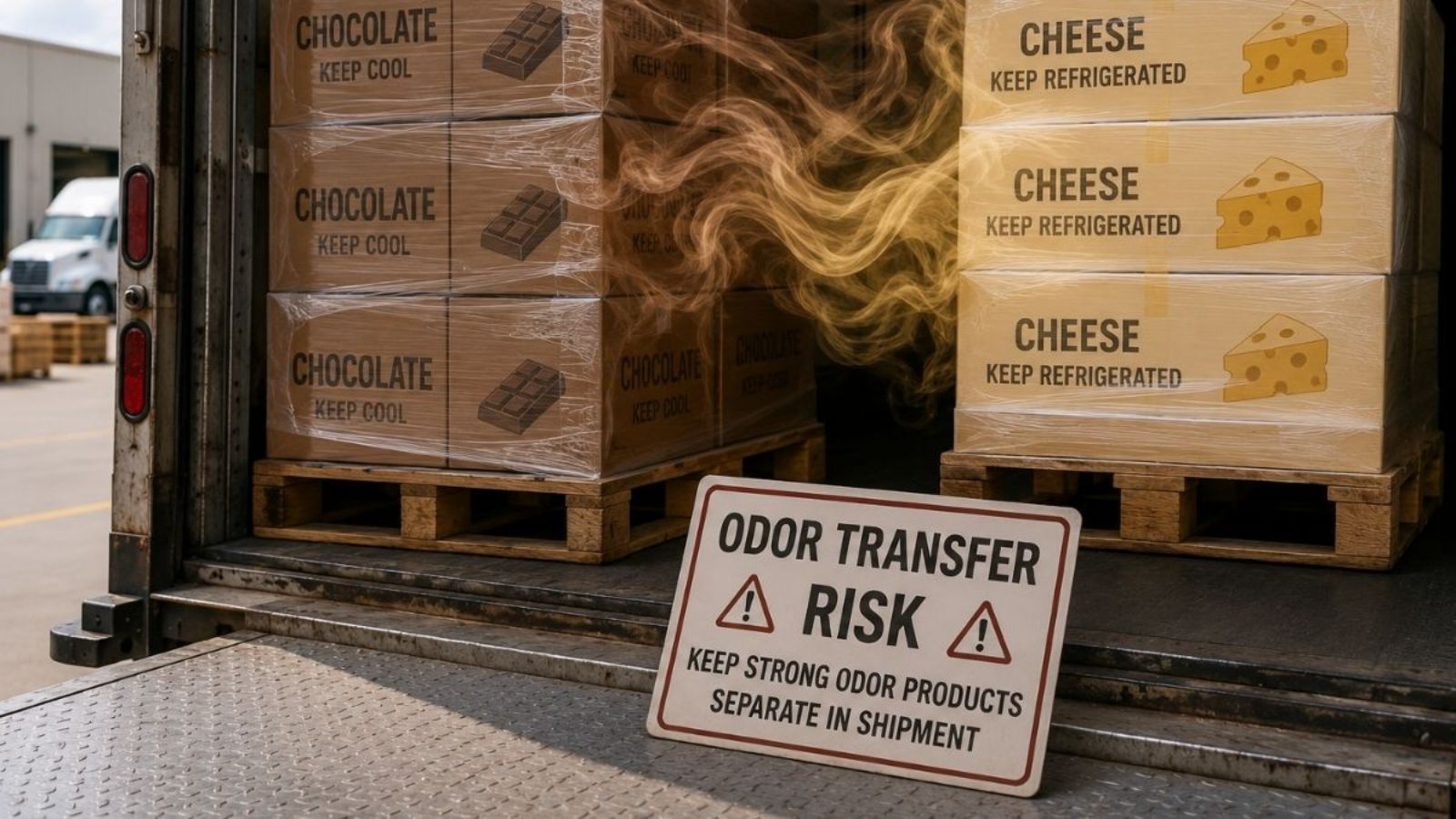
Summer shipping introduces challenges that extend beyond maintaining the correct trailer temperature. While refrigeration helps protect temperature-sensitive products, it cannot prevent every threat to food quality. Odor transfer is one issue that often receives less attention until a shipment reaches its destination.
This risk becomes more significant with mixed LTL shipments in summer. Freight from multiple shippers may share the same trailer during pickup, terminal transfers, and delivery. Chocolate and cheese are a good example. Both require careful handling, but their characteristics make them an unsuitable combination during warm weather.
Understanding how trailer conditions, freight compatibility, and LTL operations work together can help reduce preventable product quality issues.
Summer Conditions Change the Trailer Environment
Hot weather affects more than the air temperature inside a trailer.
As outside temperatures rise, enclosed trailers retain more heat between stops. Warm air and higher humidity can also enter during routine loading and unloading. These changing conditions may intensify natural food aromas and create an environment where odor migration becomes more likely.
Summer conditions can contribute to:
- Stronger food aromas inside enclosed trailers
- Higher humidity during handling
- Greater temperature fluctuations
- Longer periods of warm air exposure
- Increased potential for odor movement between products
Even when refrigerated equipment performs as expected, changing environmental conditions can still affect sensitive food products.
Chocolate and Cheese React Differently in Transit
Not every food product responds to its surroundings in the same way.
Chocolate readily absorbs nearby odors because of its fat content. Many cheeses, especially aged varieties, naturally release strong aromas during transit. Warm conditions can intensify these aromas inside an enclosed trailer.
During mixed LTL shipments in summer, this combination becomes a compatibility issue rather than simply a refrigeration concern. The products do not need to come into direct contact. Sharing the same trailer for an extended period may be enough for odor migration to occur.
Protecting product quality means considering both the shipping environment and the characteristics of the products traveling together.
Why LTL Transportation Creates Additional Exposure
Unlike full truckload shipping, LTL transportation combines freight from multiple customers into one trailer. This improves trailer utilization, but it also increases the chance that different commodities will travel together.
Most LTL shipments also move through one or more terminals before reaching their destination. At each stop, freight may be reorganized and consolidated with new shipments for the next leg of the route.
Because trailer assignments can change throughout the network, products separated at pickup may later share space with different commodities. This extends the time that odor-sensitive and aroma-producing products remain in the same enclosed environment.
Compared with dedicated truckload shipments, LTL transportation simply creates more opportunities for incompatible products to travel together before delivery.
Packaging Has Practical Limitations
Proper packaging remains an essential part of food transportation.
Shrink wrap, sealed cartons, insulated liners, and food-grade packaging help protect products from contamination and physical damage. However, these materials are not intended to completely block odor migration during longer transportation periods.
Instead, packaging works best when combined with sound operational practices, including:
- Separating aroma-producing and aroma-sensitive products
- Maintaining stable refrigerated conditions
- Reducing unnecessary dwell time
- Limiting repeated trailer transfers whenever practical
- Reviewing freight compatibility before loading begins
No single solution can eliminate every transportation risk. Packaging works best when combined with compatible loading practices and careful shipment planning.
Freight Compatibility Starts Before the Trailer Is Loaded
Successful LTL shipments are planned before freight reaches the dock.
Operations teams review shipments based on weight, size, delivery sequence, and refrigeration needs. Food shipments add another important consideration: whether products can safely share the same enclosed trailer.
During busy shipping periods, planners often balance trailer utilization with commodity compatibility. Maximizing available trailer space improves efficiency, but certain food products may require additional separation because of their sensitivity to surrounding odors. In these situations, protecting product quality may take priority over loading the trailer as densely as possible.
Before assigning freight, planners may review:
| Planning Consideration | Why It Matters |
|---|---|
| Product aroma | Strong-smelling products may affect nearby cargo. |
| Aroma sensitivity | Some foods readily absorb surrounding odors. |
| Number of transfer terminals | More handling creates additional exposure opportunities. |
| Expected transit time | Longer trips increase shared trailer time. |
| Trailer placement | Strategic positioning can reduce compatibility concerns. |
Addressing these factors before departure is often more effective than resolving quality issues after delivery.
Shipment Documentation Supports Better Load Decisions
Accurate shipment documentation provides important context beyond a product’s name.
A bill of lading may identify a shipment as food grade. However, it may not indicate whether the product absorbs odors or releases strong aromas. Including handling notes when appropriate allows carriers to evaluate compatibility before freight is consolidated with other shipments.
Clear documentation also helps maintain consistency when freight moves through multiple terminals. As shipments are transferred between trailers, handling instructions are more likely to remain visible to operations teams throughout the transportation process.
While documentation cannot eliminate every risk, it supports better decision-making from pickup through final delivery.
Protecting Mixed LTL Shipments in Summer
Managing mixed LTL shipments in summer requires more than selecting refrigerated equipment. Trailer conditions, freight compatibility, transfer frequency, and shipment planning all influence how sensitive food products perform during transit.
Chocolate and cheese demonstrate why refrigeration alone cannot eliminate every transportation risk. Understanding how products behave when they share trailer space allows shipping teams to make better loading decisions before freight begins its journey.
By evaluating compatibility early and minimizing unnecessary exposure throughout the LTL network, preventable quality issues can often be reduced before products reach their destination.
Cannonball Express Transportation
Cannonball Express Shipping Company has been providing top-of-the-line service at a reasonable rate. Based in Omaha, Nebraska, we provide nationwide refrigerated LTL services, as well as local delivery services. Contact us today!
Nationwide Shipping Company Services:
- Refrigerated LTL deliveries in the lower 48 states
- Refrigerated Cross-dock
Local Shipping Company Services:
- Redelivery Services
- Truckload & LTL Capabilities
- PUP
- Cross dock
- Transload
- Warehouse and Distribution capabilities from multiple Omaha Locations
Nebraska Warehouse One-Stop-Shop | TechnologyEnabled 3PL Value-Added Services Warehouse | Freight Broker | Logistics
Nebraska Warehouse doesn’t just help to facilitate your shipments, but we are truly a one-stop-shop solutions provider. Our services include:
Latest News
The latest information about our Omaha storage warehouse services

Why Does a Refrigerated LTL Carrier Need the PO, Appointment, and Temperature Range Before Quoting My Load?
When requesting a refrigerated LTL quote, shippers are often asked for more than the shipment's...
October 14, 2026
Why Are Refrigerated Freight Rates Rising This Fall, and What Can Small Shippers Control?
Small shippers can notice transportation costs changing as fall freight volumes shift....
September 25, 2026
What Is FSMA 204, and What Records Should Food Shippers Share With Carriers?
Food traceability is creating new documentation considerations for shippers, particularly as FSMA...
September 2, 2026
The Odor Transfer Trap: Why Mixing Chocolate and Cheese in Summer LTL Spells Disaster
Summer shipping introduces challenges that extend beyond maintaining the correct trailer...
August 4, 2026
Brutal Lessons From Moving Stadium and High School Concession Freight on Multi-Stop Reefer LTL Freight Routes
Concession freight often looks easier than it is. A refrigerated trailer may carry products for...
July 3, 2026
When Summer Heat Wave Warnings Threaten Food-Grade Cargo: The Ultimate Guide to Safe Transit
Summer heat waves can create serious challenges for food shipments. While many people think of...
June 12, 2026
Ways Data And AI Can Help You Stop Cold Chain Surprises Before They Happen
Cold chain problems rarely happen all at once. They usually build up slowly. Small delays,...
May 21, 2026
Dwell Time: The Silent Freight Killer That Wrecks Product Quality Every Hot Month
During the hottest months of the year, freight risks do not only come from transportation...
May 11, 2026
What Happens to Cold Freight on the Road During the Summer Heatwave?
During summer heatwaves, cold freight is exposed to strong thermal pressure as...
April 14, 2026
Spring Storms And Safe Deliveries: How We Plan Around Unpredictable Weather
Heavy rain, strong winds, and sudden storms can create a potential risk for drivers, vehicles,...
March 23, 2026